
Monsieur Moshe: A Bukharan Jew in the Service of the Afghan Embassy in Moscow
Ahmad Azizy
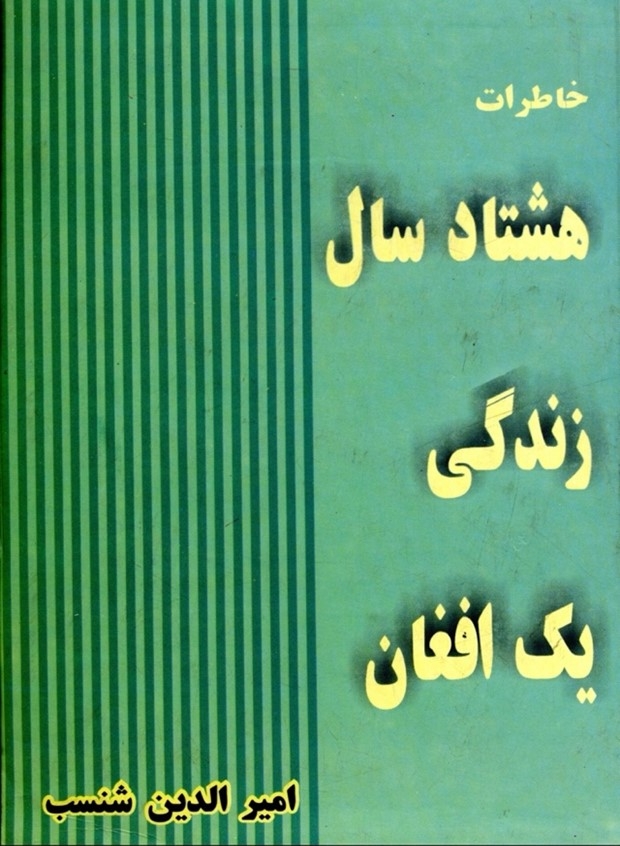
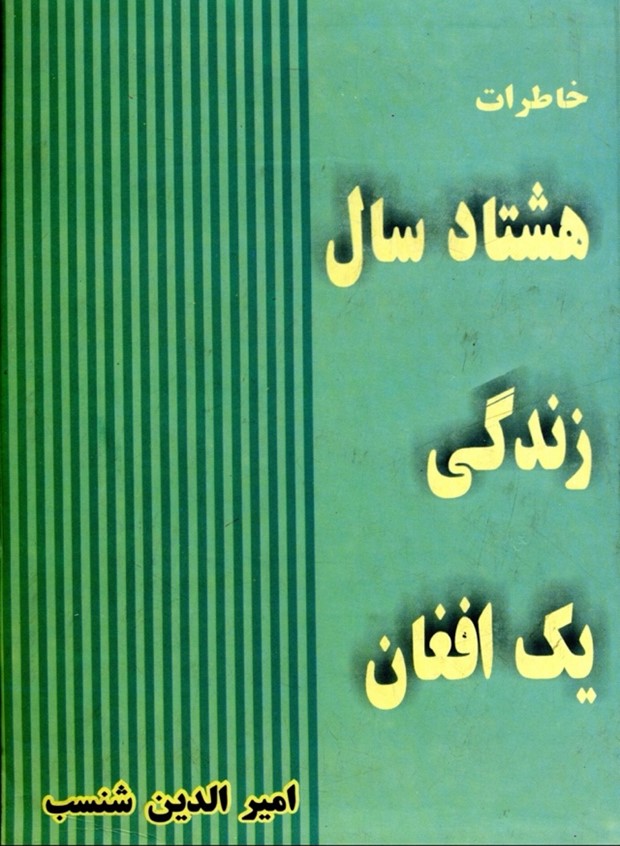
The story of Monsieur Moshe appears in Amīr ud-Dīn Shansab’s autobiography, Khaṭirāt: Hashtād Sāl Zindagī Yak Afghān (Memoirs: Eighty Years in the Life of an Afghan), first published in Peshawar in 1979 and later reissued in 1380 H.S. (2001/2002). Shansab, born in 1899, was one of five Afghan students sent to Germany in the early 1920s as part of the country’s modernization initiatives. His journey from Kabul to Berlin took him through Moscow in October 1921, where he met Monsieur Moshe (also referred to as Monsieur Mūsh), a member of the Afghan diplomatic mission who assisted the mission as political currier. The memoir not only recounts his own life and career, give a detailed recollection of this journey, highlighting the challenges and experiences of Afghan students abroad during a time of rapid change and international engagement. After spending ten years in Berlin studying electrical engineering and working for Siemens, Shansab returned to Afghanistan in the early 1930s and played a pivotal role in building the nation’s industrial infrastructure, including the Pul-i Khumri textile factory and other early industrial projects. In 1950, he briefly served as Minister of Agriculture.
According to Shansab, the students’ journey to Germany began in Kabul and proceeded through Herat and Kushk, a frontier post near the present-day Afghan-Turkmen border. From there, they boarded a freight train on the Tashkent–Orenburg Railway, the major line linking Central Asia with European Russia. Following this route, they passed through Merv, Bukhara, and Samarkand to reach Tashkent. After a stay of approximately two weeks in Tashkent, they continued towards Moscow:
“It was in the last days of October 1921 when our train arrived and stopped at the station in Moscow. The weather had become very cold. We disembarked from the train and went directly by carriage to the embassy. There, we were warmly received by Mīrzā Muḥammad Khān, the ambassador, and the other members of the embassy staff. Throughout our entire stay at the embassy, which lasted seventeen days, the ambassador’s kindness and generosity toward us did not wane. One evening, he took us to a drama performance at the Bolshoi Theatre, which, as is well known, enjoys worldwide fame.” (p. 38)
In Moscow, the young Afghan students did not only participate in cultural events. They were also introduced to the energetic and enigmatic Monsieur Moshe, whose life and activities reveal much about the cultural, economic and political entanglements of that transformative era:
“Monsieur Moshe [Mūsyū Mūsh], a Jewish political courier (kūriyar-i siyāsī) of the embassy who held an Afghan diplomatic passport, was occasionally seen in the embassy. He was, however, more occupied with the black-market trade and the smuggling activities of the embassy than with his official duties. It is even possible that he was an informant for the Russians, first handing over Afghan diplomatic mail to the relevant Soviet authorities for photocopying, and only afterwards delivering it to its intended destination.
He was one of the Bukharans, and he knew Russian well. After the October Revolution of 1917 in the Soviet Union, commerce had largely passed out of private hands, and trade in general had deteriorated. In the markets, nothing could be found. In contrast, the black market was extremely active. The trade in jewelry in general, and in brilliants and diamonds in particular, offered excellent profit opportunities in Moscow, with eager buyers in Germany and other European countries. Conversely, manufactured goods and materials of all kinds, which were plentiful and cheap in European markets, found a strong black-market demand in Moscow. Through these reciprocal exchanges, the embassy’s own black-market dealings were also thriving.” (p. 39)
At the end of 1921, Moscow was a city of shortages and uncertainty. The Russian Civil War had just ended, and the new Soviet regime was struggling to rebuild an economy shattered by revolution and famine. The official markets were nearly empty, and rationing was widespread. This is also what Shansab’s account suggests, Moshe was deeply involved in such trade, both for the embassy and for himself and played a pivotal role. A Bukharan Jew fluent in Russian, he embodied the cross-cultural intermediaries typical of Central Asian trade networks. His linguistic and cultural flexibility made him indispensable to the embassy’s dealings. Officially, he served as a political courier for the Afghan embassy in Moscow; unofficially, he acted as a broker, transporter, and possibly an informant. His Afghan diplomatic passport enabled him to move across Soviet borders with relative ease, facilitating the exchange of jewels for European goods and the transfer of money or correspondence that otherwise could not safely travel through official Soviet channels. Whether he also cooperated with Soviet intelligence – as the author of the memoirs assumes – or merely operated within a tolerated gray zone remains uncertain.
But even Monsieur Moshe could not solve all the problems in post-revolutionary Moscow. Shansab describes how their attempts to purchase clothing and suits for themselves in Moscow were unsuccessful, illustrating the severe economic conditions of the early Soviet period. Monsieur Moshe was, among other things, responsible for managing such practical matters, though the exact scope of his duties is not clearly defined. What is certain, however, is that he accompanied the Afghan students all the way to Berlin. On this subject, the author writes:
“Train traffic toward Europe was regular and well-organized; trains always ran according to schedule. The scarcity of carriages was hardly noticeable. For that reason, we could not understand the cause of our delays and stops in Moscow, except that the frequent comings and goings of Monsieur Moshe at the embassy and his intense activity made it clear that he was attending to his business. Until he had procured the necessary goods, we had to remain in Moscow.
In any case, the date of our departure had been set. At that time, a formal treaty of friendship between Afghanistan and Germany had not yet been concluded. However, Afghan political groups were active in Turkey, France, and Italy, engaged in educational missions, introducing Afghanistan, and negotiating preliminary agreements of friendship and political cooperation.
In Berlin, we did not yet have an embassy, but Adīb Afandi, brother-in-law of [Mahmud] Tarzi was active in Afghan affairs there. He did not have an official office in Berlin and stayed in rented apartments. The Afghan Embassy in Moscow had sent him a telegram regarding our departure for Berlin, so he was aware of the date of our arrival.
On the scheduled date, we departed for Berlin under the supervision of Monsieur Moshe and bade farewell to our compatriots. The train was very clean and well-organized. We were assigned seats in the German compartment, which would remain our accommodation until Berlin. The Afghan Embassy in Moscow had not been aware that, although the route through Poland was a transit passage, a transit visa was required, and one had not been obtained for us.
When our train entered Poland from Russia and passports were being checked, it became clear that we did not have a Polish transit visa. The Polish officials, upon seeing our unusual appearance and clothing, as well as our Afghan passports, which few people in Europe recognized, realized that we were inexperienced travelers. They treated us kindly and with friendliness. One of them took us personally in his car to a photographer’s studio, had our photographs taken, and then escorted us to the visa office, where a transit visa was arranged for us. He then returned us safely to our train.
All these expenses were borne by him; he made every effort to assist us, and we were extremely grateful. When our train entered Poland and we were passing through the town of Volga, we encountered an unexpected delay. The train stopped for several hours, and we took the opportunity and in guidance of Monsieur Moshe explored the town. At lunchtime, we entered a reputable restaurant along our route to have a meal.” (p. 40–43)
Although the author does not provide many details about his direct encounters with Monsieur Moshe, they spent considerable time together during the long journey from Moscow to Berlin, both inside and outside the train. Moshe not only arranged their tickets and travel logistics but was also responsible for ensuring their safe arrival in Berlin. Throughout the journey, he acted as their guide and intermediary. The remarks in the memoir concerning the economic situation in early Soviet Moscow, particularly the references to the black market and the trade in brilliants and diamonds, were most likely derived from Moshe himself. Nowhere else in the autobiography does the author discuss such matters, and there is no indication that he was personally involved in trade or commercial activity. This suggests that these observations are likely based on Moshe’s own accounts during the journey from Moscow to Berlin and reflect his familiarity with such business matters and his probable involvement in them.
The story of Monsieur Mush continues when the students arrive in Berlin.. Upon their arrival at the Zoologischer Garten, they did not know the address of Efendi, and therefore had to wait at the station until Monsieur Mush went to the Soviet Embassy in Berlin to obtain Efendi’s address:
“Monsieur Mush went to the Soviet Embassy to obtain Afandi’s address and bring it to us. Until the time Monsieur Mush returned, people moving about the station, boarding and leaving their trains, stopped to watch us standing among our luggage. They thought they were witnessing a scene from a movie. From a distance, people stared at us, they would look to the ground rather than at us, following the general delicacy. The scene continued until Moshe arrived.
He had obtained Afandi’s address and had telephoned him, so that when we arrived, Afandi would be ready. When Moshe returned, we left our goods at the station’s storage facility. Monsieur Moshe had arranged a taxi for us and gave the driver Afandi’s address, which was located in Schlachtensee on the outskirts of Berlin. He then bid us farewell.” (p. 43–44)
With this sentence, Monsieur Moshe also disappears from Shansab’s memoirs. Neither the Afghan students nor the readers encounter him again on the following ** pages. Monsieur Moshe presence in Shansab’s memoir is brief but underscores his immense role in the Afghan Embassy’s operations in Moscow. More than a political courier, Moshe was a navigator of borders, languages, and social worlds, moving seamlessly between diplomacy and commerce as he did between countries. His creativity, local knowledge, and personal initiative enabled Afghan students and officials to navigate a complex and often precarious political, social and economic landscape between Central Asia, the Soviet Union and Europe in the early 1920s.
-----
Note: The political courier (kūriyar-i siyāsī) in Afghanistan was appointed to handle political and diplomatic communications. Such individuals were granted Afghan nationality and issued diplomatic passports, reflecting their official status and the privileges associated with their role. Political couriers were often stationed in local missions or embassies abroad to ensure secure and authorized communication between Afghan authorities and foreign governments. The legal framework for political couriers of later decades, indicates continuity with earlier administrative practices, likely adapting provisions from the regulatory decrees (nizāmnāma) of the 1920s. These regulations formalized the role, duties, and legal protections of political couriers, illustrating the Afghan government’s efforts to institutionalize diplomatic and political communication during this periodAfghanistan, Uṣūlnāma-yi Kuriyar-i Siyāsī [Political Courier Regulation] (Matbaʿa-yi Umūmī, 1323 [1944–1945]).